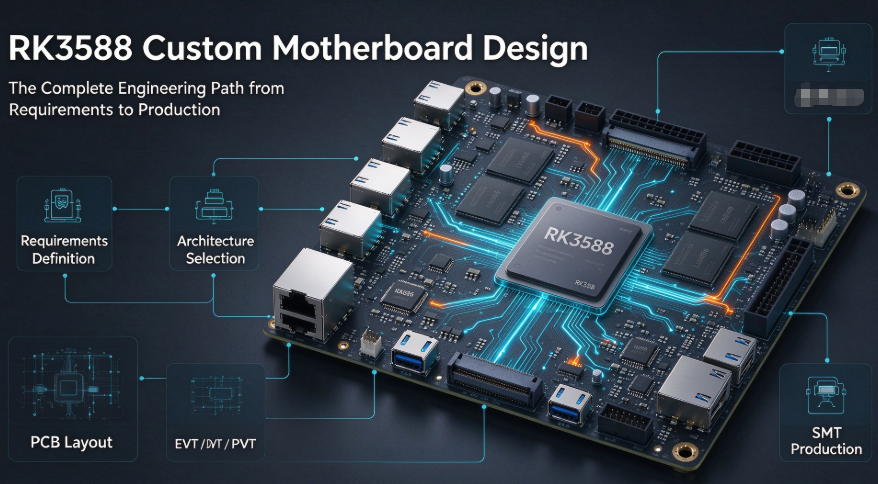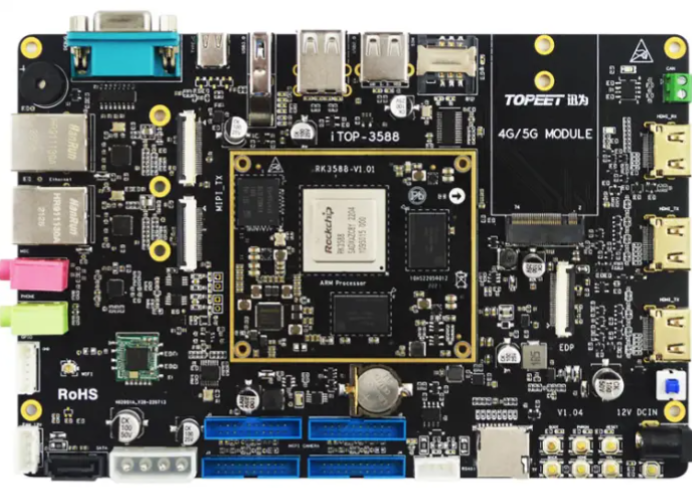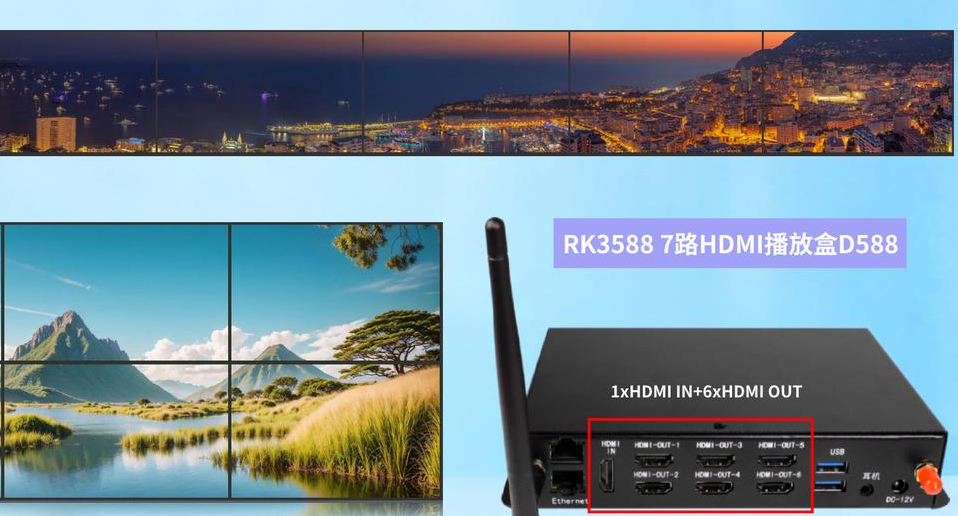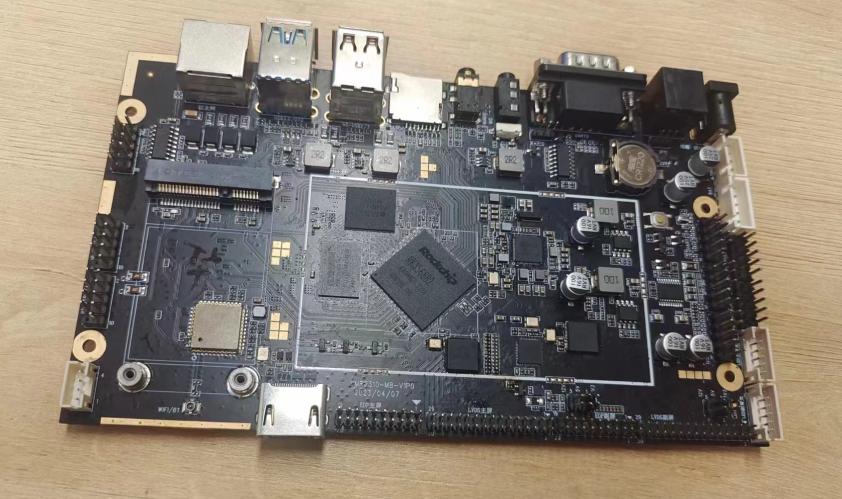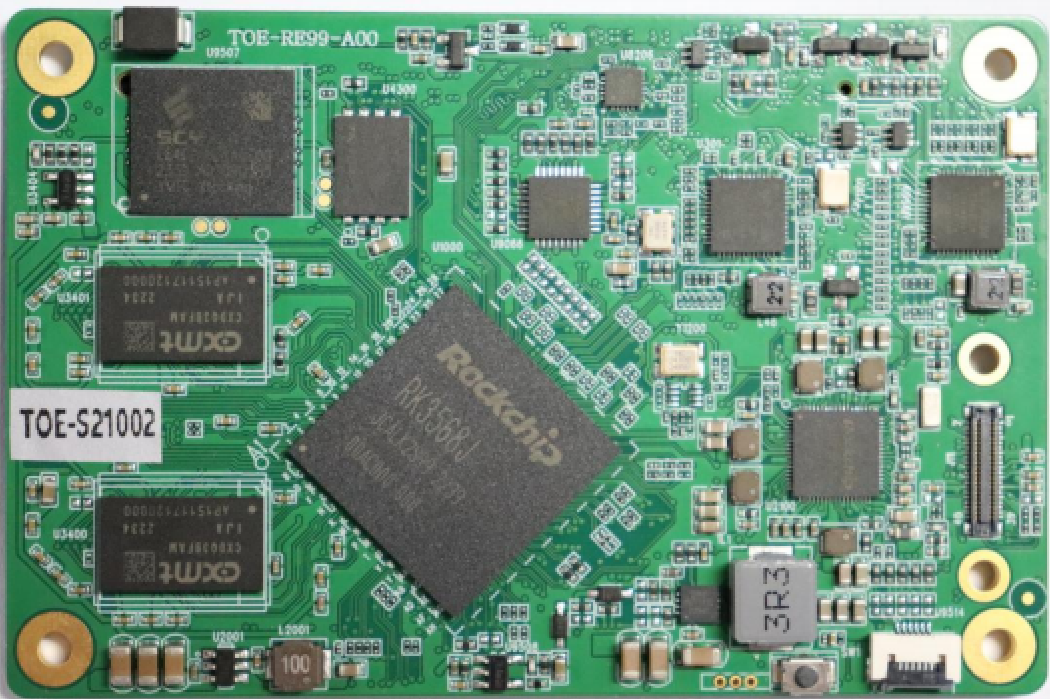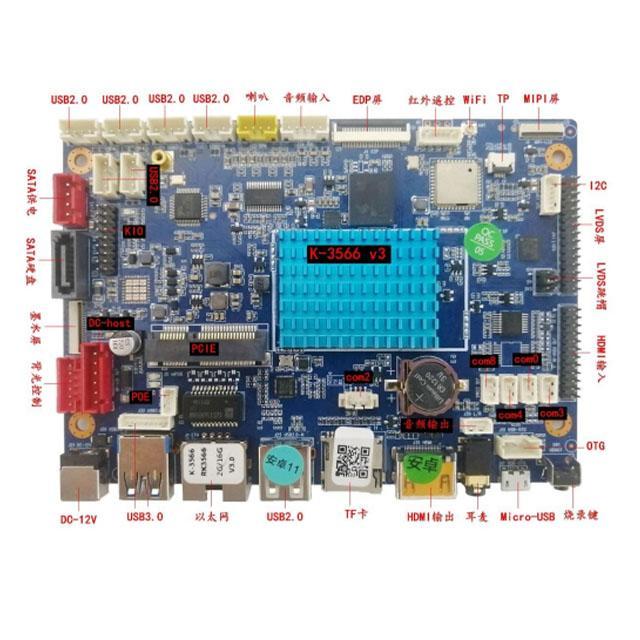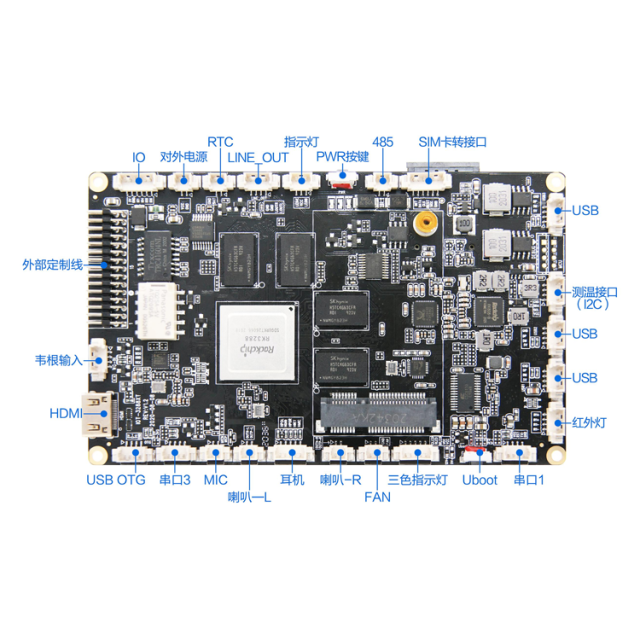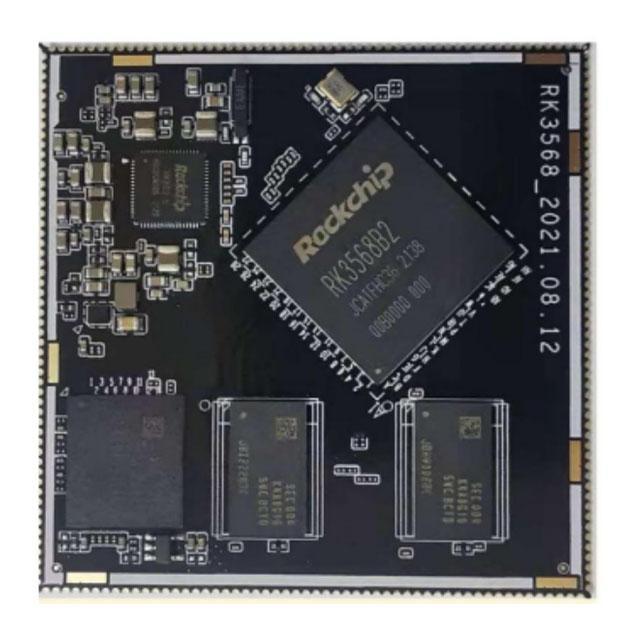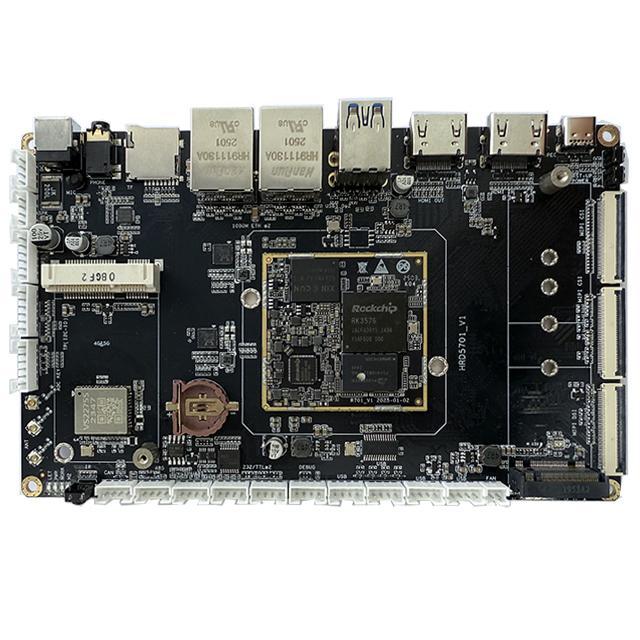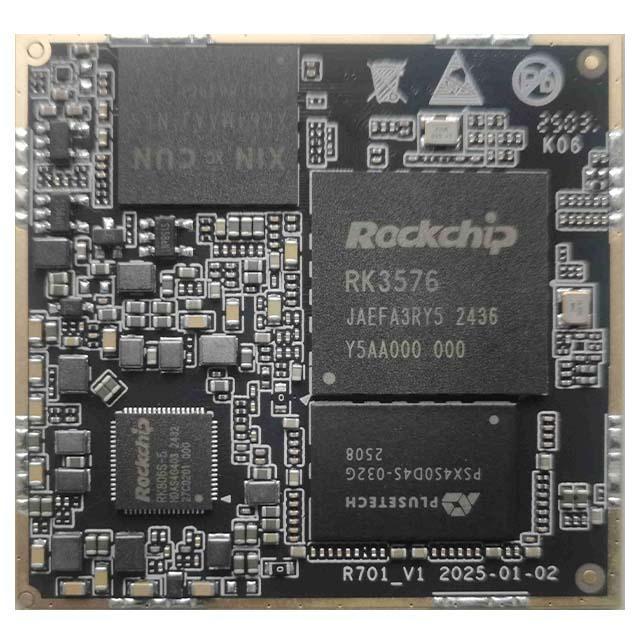
RK3588 solution customization involves turning the RK3588 chip into a complete product solution integrating hardware, operating systems, and applications based on specific business scenarios. For most projects, the optimal approach is to first validate the design using a System-on-Module (SoM) and a custom carrier board, then decide whether to upgrade to a fully custom chip-level design based on shipment volume and cost targets. The success of customization depends on four key factors: clearly defined requirements, properly matched interfaces and computing power, stable hardware power and thermal management, and long-term maintenance of the software BSP.
Table of Contents
- What Is RK3588? Key Specifications at a Glance
- Why Customize an RK3588 Solution?
- Three Customization Models: SoM, Full-Board, and Chip-Level
- Requirements Checklist Before Customization
- Key Considerations for RK3588 Hardware Customization
- Key Considerations for RK3588 Software Customization
- Typical Custom Application Scenarios
- Custom Development Process and Estimated Timeline
- Cost Structure and Cost-Control Strategies
- Common Pitfalls to Avoid
- How to Choose a Custom Solution Provider
- Frequently Asked Questions (FAQ)
- Conclusion
1. What Is RK3588? Key Specifications at a Glance
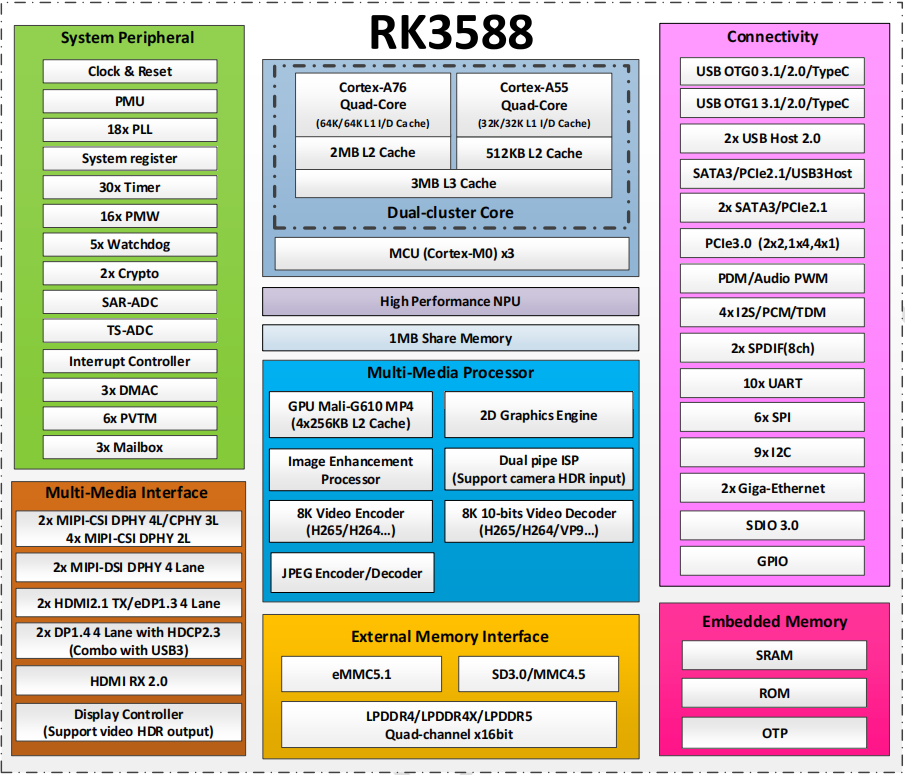
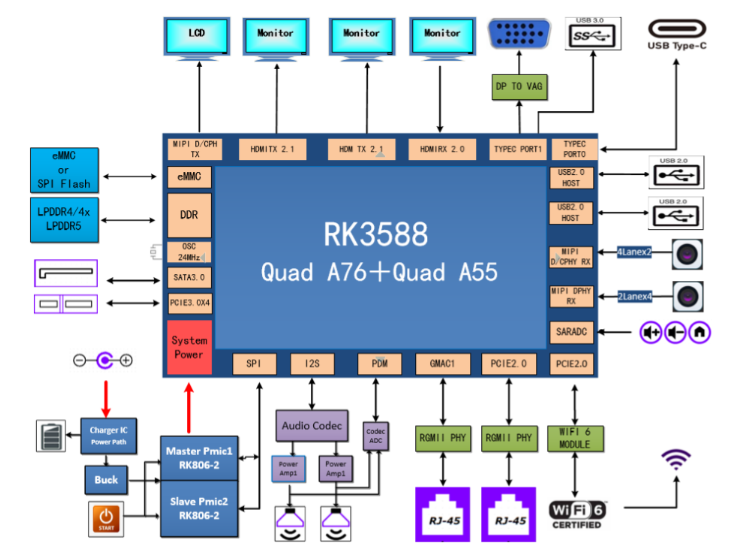
RK3588 is a high-performance, low-power processor developed by Rockchip for applications such as ARM PCs, edge computing, and multimedia terminals. Based on official documentation and publicly available specifications from major manufacturers, its core capabilities are as follows:
| Module | Key Specifications |
|---|---|
| CPU | 4× Cortex-A76 + 4× Cortex-A55, implementing the ARMv8-A instruction set, with NEON and cryptographic extensions |
| GPU | ARM Mali-G610 MP4, supporting OpenGL ES 3.2, OpenCL 2.2, and Vulkan 1.2 |
| NPU | Up to 6 TOPS of computing power, triple-core architecture, supporting mixed-precision operations in INT4/INT8/INT16/FP16 |
| Video Decoding | Supports 8K@60fps for H.265/VP9/AVS2 and 4K@60fps for AV1, with multi-stream parallel decoding |
| Video Encoding | Supports H.265/H.264 encoding up to 8K@30fps, with multi-stream parallel encoding |
| ISP | Up to 48MP, supporting hardware algorithms such as HDR, 3DNR, defogging, and fisheye correction |
| Memory | LPDDR4/LPDDR4X/LPDDR5, with an addressable capacity of up to 32GB |
| Display Output | Supports HDMI/eDP, DP, and MIPI DSI, with multi-display output and independent content across screens; supports output resolutions up to 8K |
| Camera Input | MIPI DPHY/CPHY, DVP, BT.1120, and HDMI RX; supports approximately six camera inputs at most, depending on the interface combination |
| High-Speed Interfaces | PCIe 3.0 (supporting lane bifurcation), PCIe 2.1/SATA/USB 3 Combo PHY, and dual Gigabit Ethernet controllers |
| Package | FCBGA1088, approximately 23 mm × 23 mm |
Note: Specific interface combinations and maximum supported resolutions are subject to Rockchip’s official datasheet and the specifications of the selected SoM. Some chip interfaces are mutually exclusive. For example, certain USB 2.0 OTG and USB 3.1 configurations cannot be used simultaneously. These restrictions must be verified during the component selection stage.
2. Why Customize an RK3588 Solution?
Standard development boards are suitable for evaluation, but they are rarely ready for direct integration into a final product. The main benefits of customization include:
- Interface customization: Retain only the interfaces required by the project to reduce cost and size, or expand the design as needed to support multiple cameras, multiple Ethernet ports, RS485/CAN, PCIe expansion, and other interfaces.
- Mechanical design and thermal management tailored to the complete product: Customize dimensions, mounting methods, bare-board or enclosure configurations, and fanless cooling solutions.
- Deep integration of software with business requirements: Customize boot screens, display and camera compatibility, NPU model deployment, remote OTA updates, and other functions.
- Reduced mass production costs: As shipment volume increases, the design can be upgraded from an SoM plus carrier board to a full-board or chip-level solution to further reduce costs.
- Supply chain management and long-term maintenance: Component selection, alternative components, design revision control, and long-term supply availability can all be planned during the customization stage.
3. Three Customization Models: SoM, Full-Board, and Chip-Level
| Comparison Item | SoM + Custom Carrier Board | Full-Board / Single-Board Customization (ODM) | Fully Custom Chip-Level Design |
|---|---|---|---|
| Hardware and software investment | Low | Medium | High |
| Development cycle | Short | Medium | Long |
| R&D risk | Low (the SoM has already been validated) | Medium | High (DDR, power supply, and high-speed signals must all be managed in-house) |
| Unit cost | Medium | Medium to low | Lowest, for large-volume production only |
| Suitable production volume | Small to medium batches | Medium batches | Large batches |
| Suitable team | Teams seeking rapid time to market with limited hardware engineering resources | Teams with clear product requirements but limited hardware engineering resources | Teams with mature RK platform hardware and BSP engineering capabilities |
Selection Recommendations:
- Low annual shipment volume and a priority on time to market: Choose an SoM plus a custom carrier board.
- Clearly defined mechanical and interface requirements with a preference for one-stop delivery: Choose full-board customization/ODM.
- Large-scale mass production, extreme sensitivity to BOM costs, and an experienced RK platform engineering team: Consider chip-level customization.
4. Requirements Checklist Before Customization
Customization rework often results from unclear requirements at the initial stage. Before contacting a supplier, clarify the following questions:
- Application scenario: Edge AI, multi-display systems, industrial control, video processing, robotics, or automotive applications?
- Computing requirements: Model type and size, frame rate, number of concurrent streams, and the number and resolution of video encoding and decoding streams.
- Storage and memory: Memory capacity (4/8/16/32GB) and requirements for eMMC/NVMe/SATA.
- Interface list: Number and types of cameras, number of displays and display interfaces, Ethernet ports, USB, serial ports, CAN, RS485, PCIe, and wireless modules.
- Environmental conditions: Operating temperature, dust and water protection, vibration requirements, and whether a fan is permitted.
- Operating system and software: Linux/Android/Debian/Ubuntu, and whether real-time performance, secure boot, or OTA updates are required.
- Certification and compliance: CE/FCC/CCC, EMC, industry-specific certifications, and other requirements.
- Mass production planning: Estimated shipment volume, delivery schedule, target cost, and product lifecycle.
5. Key Considerations for RK3588 Hardware Customization
5.1 Power Supply and Power Sequencing
RK3588 has multiple voltage and power domains, making power supply design complex.
- A dedicated PMIC, such as the corresponding RK806, is typically used. The design must follow the official reference design and power-on sequencing requirements.
- The core power rails for the CPU, GPU, NPU, DDR, and other components must provide sufficient current headroom. Decoupling capacitors should be placed close to the chip.
- When designing a custom carrier board, pay particular attention to peripheral power supplies, power-on sequencing during system startup, cold-temperature startup, and the effects of sudden load changes on the power supply.
5.2 DDR and High-Speed Signals
LPDDR4/LPDDR4X/LPDDR5 routing has extremely demanding requirements for stack-up design, length matching, impedance control, and reference planes. Teams without specialized expertise are not advised to undertake chip-level DDR design directly.
This is one of the biggest advantages of the SoM approach: the most challenging part of the design is packaged into a pre-validated module.
High-speed differential signals such as PCIe, USB 3, HDMI/DP, and MIPI require controlled impedance, matched differential pair lengths, and proper return paths. Eye diagram and compatibility testing should be performed after prototype fabrication.
5.3 PCB Layer Count and Manufacturing Processes
- The carrier board’s layer count should be determined based on the number and density of interfaces. Simple carrier boards may use fewer layers, while designs with numerous interfaces and high-speed signals require more layers to maintain complete reference planes.
- SoMs and compact boards commonly use HDI and blind/buried via technologies. A DFM review should be conducted with the PCB manufacturer in advance.
- High-speed PCB materials, impedance control requirements, and surface finishes such as ENIG should be confirmed in advance.
5.4 Thermal Management Design
The RK3588 generates significant heat under heavy workloads, especially when multiple video streams, the NPU, and the GPU operate simultaneously. System-level thermal management is therefore essential.
- Select an appropriate cooling solution, such as a heat sink, heat pipe, integrated metal enclosure, or fan.
- For fanless designs, conduct heat from the chip to the enclosure and verify the thermal throttling strategy through actual testing under high-temperature conditions.
- Configure thermal management policies on the software side, including DVFS and throttling thresholds, to prevent overheating-related instability.
5.5 Interface and Expansion Customization
| Requirement | Common Customization Methods |
|---|---|
| Multiple cameras | MIPI CSI and serializer/deserializer expansion, such as GMSL/FPD-Link |
| Independent multi-display output | Combined HDMI, eDP, DP, and MIPI DSI outputs |
| Industrial buses | RS485, RS232, CAN/CAN FD, and isolation design |
| High-speed storage | NVMe (PCIe), SATA |
| Wireless communication | Wi-Fi, Bluetooth, and 4G/5G modules |
| AI acceleration expansion | Additional AI acceleration modules through PCIe expansion |
6. Key Considerations for RK3588 Software Customization
6.1 Operating System and BSP
Common operating systems for RK3588 include Linux (Buildroot/Yocto/Debian/Ubuntu) and Android. Customization typically includes:
- Kernel and device tree adaptation: Adapting pins, clocks, power supplies, and peripheral drivers for the new carrier board.
- Display adaptation: Configuring timing, touch functionality, backlighting, and independent multi-display output for new displays.
- Camera and ISP debugging: Sensor drivers, image quality tuning, and multi-camera synchronization.
- System trimming and boot optimization: Reducing boot time, customizing boot screens, and minimizing unnecessary services.
- Mass production tools: Flashing, production testing, and serial number and MAC address management.
6.2 Video and AI Deployment
- Video encoding and decoding can use Rockchip hardware acceleration solutions such as MPP, while 2D image processing can leverage RGA hardware acceleration.
- NPU model deployment typically uses the RKNN toolchain (the RKNN-Toolkit series) to convert models from TensorFlow, PyTorch, ONNX, Caffe, and other frameworks for execution on the NPU.
- Key considerations include operator support, quantization-related accuracy loss, concurrent scheduling of multiple models, and coordination among the CPU, GPU, and NPU.
6.3 System Security and Operations
- Secure boot, firmware signing, and file system encryption.
- A/B partition updates, remote OTA updates, watchdogs, and self-recovery mechanisms.
- Logging, remote diagnostics, and batch device management capabilities.
7. Typical Custom Application Scenarios
| Application Scenario | Key Customization Requirements |
|---|---|
| Edge AI boxes | Multi-stream video decoding, NPU inference, Ethernet ports, and compact fanless cooling |
| Multi-display interaction / commercial displays / video walls | Multiple display outputs, touch functionality, and high-resolution decoding |
| Industrial vision and robotics | Multiple cameras, industrial buses, real-time performance, and wide operating temperature ranges |
| Smart security and video analytics | Multi-stream encoding/decoding, AI detection, networking, and storage |
| ARM desktops / edge servers | Large memory capacity, NVMe, multiple Ethernet ports, and a stable operating system |
| Smart home / intelligent gateway hubs | On-device AI, multi-protocol communication, and high-concurrency networking |
8. Custom Development Process and Estimated Timeline
| Stage | Main Activities | Deliverables |
|---|---|---|
| 1. Requirements Review | Define application scenarios, interfaces, computing power, mechanical requirements, and cost targets | Requirements specification |
| 2. Solution Design | Component selection, schematic planning, mechanical design, and thermal management planning | Solution review document |
| 3. Hardware Design | Schematic design, PCB placement and routing, simulation, and design review | Schematics and PCB files |
| 4. Prototyping and Debugging | PCB fabrication, SMT assembly, initial power-on, and basic functional debugging | Hardware prototype |
| 5. Software Development | BSP adaptation, driver development, application integration, and AI model deployment | Operational system and applications |
| 6. Verification and Testing | Functional, stability, high- and low-temperature, aging, EMC, and certification testing | Test reports |
| 7. Small-Batch Trial Production | Process validation, production-line testing, and yield statistics | Trial production report |
| 8. Mass Production | Material management, manufacturing, testing, and after-sales support | Mass production delivery |
Estimated timeline: The actual schedule depends on project complexity, team capabilities, and supply chain conditions. Projects using an SoM and a custom carrier board can generally reduce hardware risks and development time significantly. Fully custom chip-level designs require additional time for DDR debugging, multiple PCB revisions, and certification.
It is recommended that suppliers provide a phased delivery plan during the project initiation stage.
9. Cost Structure and Cost-Control Strategies
One-time costs (NRE): Hardware design, software adaptation, prototyping, testing, certification, molds, and test fixtures.
Mass production costs (BOM): Main control chip/SoM, memory and storage, PCB, power supply, interface components, thermal management and mechanical parts, assembly, and testing.
Cost-Control Strategies:
- Configure memory and storage according to actual requirements to avoid overdesign.
- Retain only necessary interfaces to reduce the number of connectors and isolation components.
- Use an SoM for rapid market validation in the early stages, then upgrade to a full-board or chip-level design to reduce costs as production volume increases.
- Evaluate thermal management, mechanical structure, and power supply design together to avoid high costs caused by late-stage mechanical redesign.
- Secure supply and identify alternative sources for critical components in advance.
10. Common Pitfalls to Avoid
- Requirements have been documented in a review specification, and interfaces, computing power, mechanical design, and cost have been confirmed.
- Verify mutually exclusive chip interfaces to avoid designing for interfaces that cannot actually be used simultaneously.
- Power supply design and power-on sequencing have been reviewed against the official reference design.
- Thermal performance has been tested under high-temperature, full-load conditions rather than evaluated only based on idle temperatures.
- Confirm the BSP kernel version, update strategy, and long-term maintenance commitments.
- AI models have been validated on the actual hardware board for operator support and accuracy, rather than evaluated solely based on theoretical computing power.
- Memory bandwidth and system stability have been verified when multiple video streams and displays operate simultaneously.
- Test points, flashing interfaces, and tools have been reserved for production-line testing.
- Acceptance criteria, intellectual property rights, and source code delivery scope have been clearly defined in the contract.
- Mass production supply, alternative components, and after-sales procedures have been confirmed with the supplier.
11. How to Choose a Custom Solution Provider
| Evaluation Criteria | Key Considerations |
|---|---|
| RK Platform Experience | Does the provider have successful RK3588 SoM or complete-system projects and mass production experience? |
| Full-Stack Hardware and Software Capabilities | Does the provider have capabilities in hardware design, BSP development, driver development, and AI deployment? |
| Technical Support | Documentation, SDKs, community resources, response times, and availability of on-site support |
| Delivery and Manufacturing | Does the provider have its own factory or reliable manufacturing partners? Does it support small-batch production? |
| Quality and Certification | Testing procedures, aging tests, EMC testing, and certification support capabilities |
| Long-Term Supply | Supply assurance and lifecycle support for chips, memory, and critical components |
| Commercial Terms | NRE costs, deliverables, source code licensing, confidentiality, and after-sales responsibilities |
lst RK3588 Custom Solution Services: We provide SoM, full-board, and complete-system customization, covering hardware design, BSP adaptation, AI deployment, and mass production delivery. Contact us to discuss your requirements and obtain a quotation.
(Before publication, replace this section with your company’s actual service capabilities, project cases, and contact information.)
12. Frequently Asked Questions (FAQ)
Q1: What types of customized products are suitable for RK3588?
RK3588 is suitable for products requiring high-performance video processing, edge AI, multi-display output, multiple camera inputs, and rich interfaces. Typical applications include edge AI boxes, industrial vision systems, robotics, smart security systems, commercial display terminals, and ARM-based edge servers.
Q2: Should I choose an RK3588 SoM or develop a chip-level design from scratch?
For most projects, starting with an SoM is recommended. The SoM integrates high-risk components and designs, such as DDR and power management, into a modular solution, significantly reducing development risks and timelines. Chip-level customization should be considered only when shipment volumes are high and the team has mature RK platform hardware and BSP development capabilities.
Q3: Is the RK3588 NPU’s computing power sufficient?
With up to approximately 6 TOPS of computing power, the RK3588 is suitable for mainstream edge AI models used for detection, recognition, segmentation, and similar tasks. Whether its performance is sufficient depends on model size, accuracy after quantization, the number of concurrent streams, and frame rate. Testing with actual models on a development board is recommended.
Q4: How many cameras and displays does RK3588 support?
At the chip level, RK3588 supports combinations of up to approximately six camera inputs and multiple display outputs, including independent content across multiple screens. The actual number of supported cameras and displays depends on pin multiplexing, the interfaces exposed by the SoM, and carrier board design.
Q5: How long does RK3588 customization take?
The development timeline depends on the customization model and project complexity. An SoM plus carrier board generally requires less time, while fully custom chip-level development takes longer. It is recommended that suppliers provide a clearly defined project timeline with milestones for each development stage.
Q6: What software development work is required for RK3588 customization?
Typical tasks include BSP adaptation, device tree configuration, display and camera driver development, ISP debugging, system trimming, hardware-accelerated video encoding and decoding, NPU model deployment, OTA updates, security policy configuration, and mass production flashing tools.
Q7: How can excessive heat in RK3588 devices be addressed?
Address thermal issues through both mechanical cooling and software-based thermal management. Optimize heat sinks, heat pipes, and heat transfer paths through the enclosure, adding a fan if necessary. At the same time, adjust DVFS and thermal throttling strategies, and verify the results under high-temperature, full-load operating conditions.
Q8: How should source code and intellectual property rights be defined in a customization project?
The contract should clearly define the delivery scope and licensing terms for schematics, PCB design files, BSP, and application code. Confidentiality requirements, acceptance criteria, and responsibilities for ongoing maintenance should also be specified.
13. Conclusion
The core objective of RK3588 solution customization is to find the right balance among performance, cost, development time, and risk. Use an SoM to validate the solution quickly, control rework through a clearly defined requirements checklist, ensure stability through system-level power, thermal, and software design, and achieve successful mass production through reliable manufacturing and supply chain management.