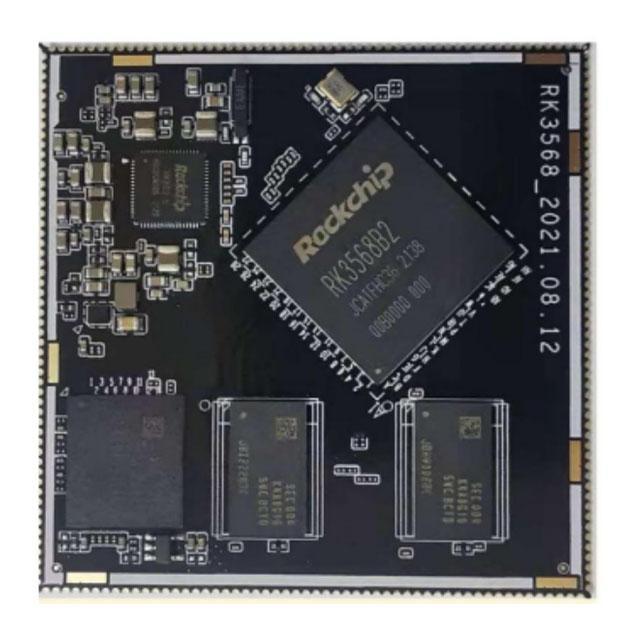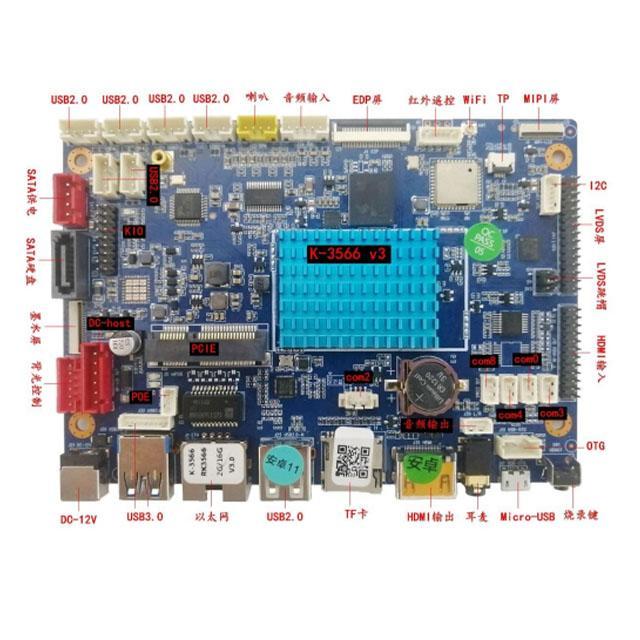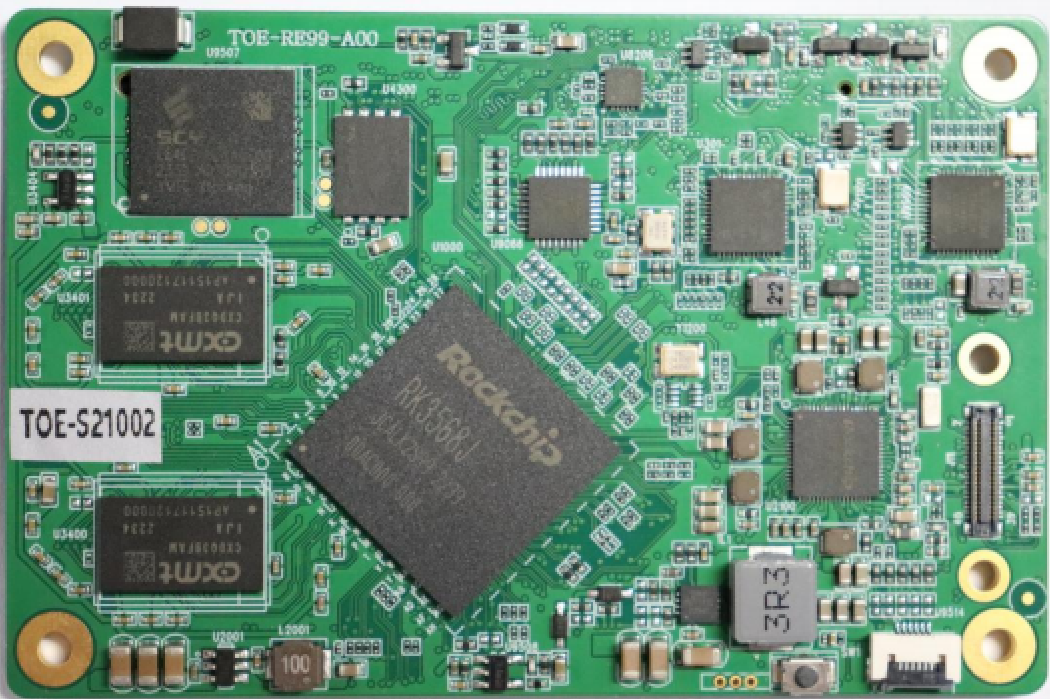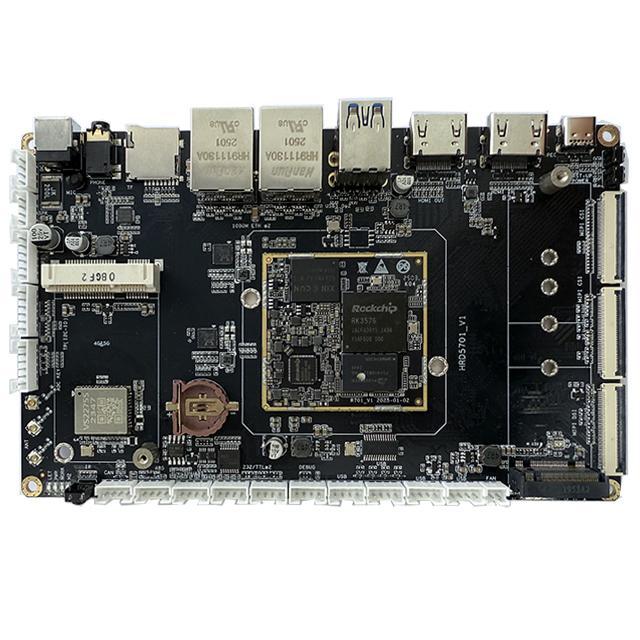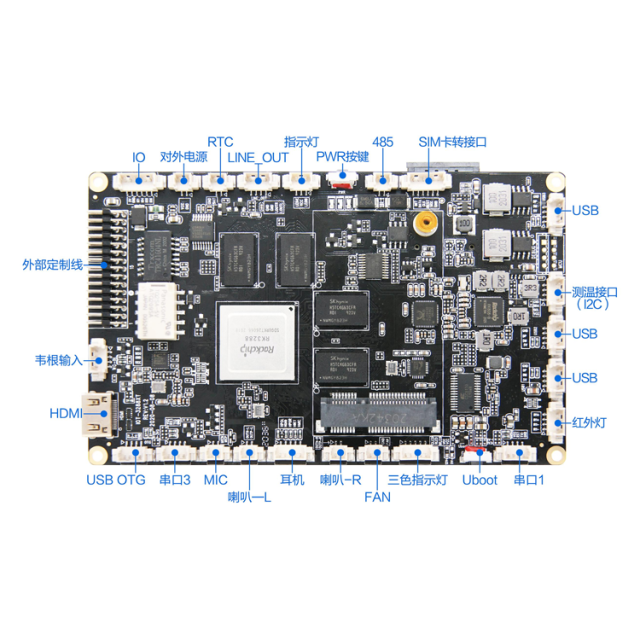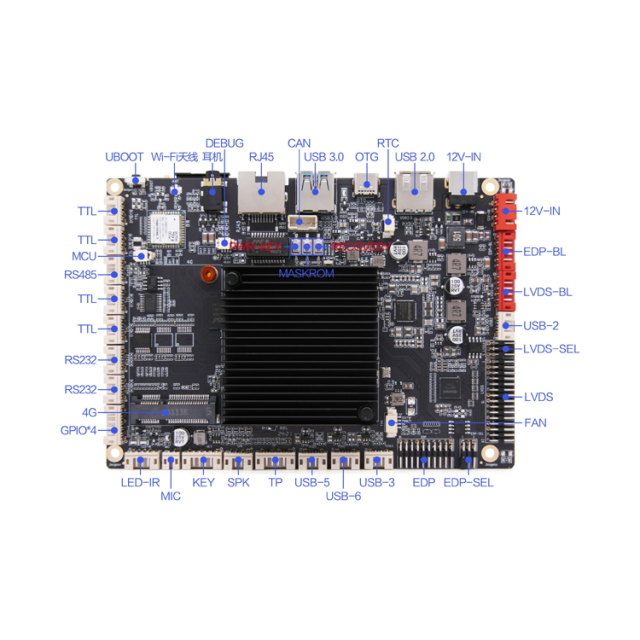
Choosing the right processor is one of the most important decisions in developing an edge AI product. The processor affects not only AI inference performance but also hardware architecture, power consumption, thermal management, software development, manufacturing costs, and long-term product scalability.
Among Rockchip’s embedded AI processors, the RK3588 and RK3576 are two attractive options for industrial automation, smart displays, machine vision, AI gateways, intelligent retail systems, and other AIoT applications.
Both processors feature octa-core ARM CPUs and integrated NPUs rated at 6 TOPS. However, their CPU architectures, GPU capabilities, memory subsystems, multimedia processing performance, and peripheral configurations differ significantly.
So, which processor should you choose?
Quick Answer
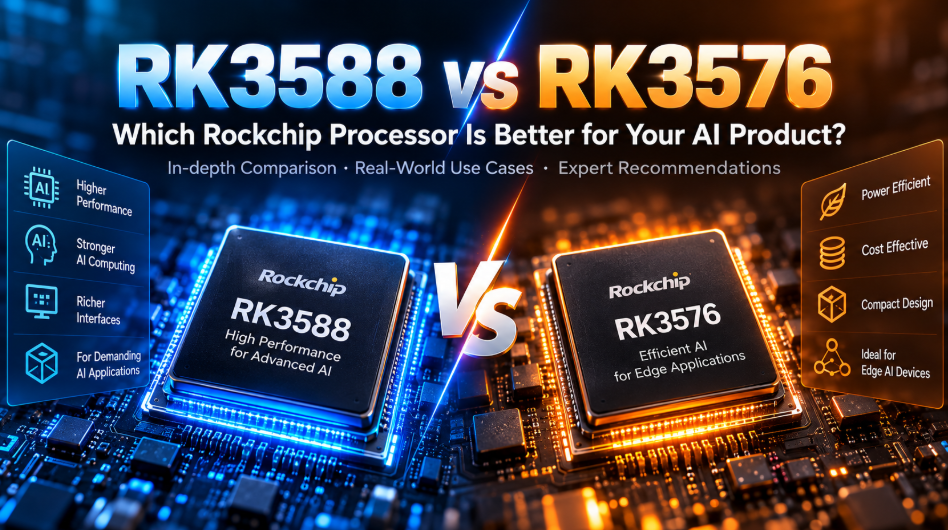
The RK3588 is generally the better choice for compute-intensive edge AI products, multi-camera vision systems, high-resolution video processing, and advanced graphics applications. The RK3576 is often a more suitable option for cost-sensitive AIoT devices, industrial HMI systems, intelligent gateways, and embedded products that prioritize power efficiency and integrated control capabilities.
Although both processors offer 6 TOPS of theoretical NPU computing performance, they do not necessarily deliver identical real-world AI inference throughput.
The best choice depends on the complete workload, including AI model architecture, input resolution, memory bandwidth, CPU preprocessing, video processing, and the number of simultaneous tasks.
1. RK3588 vs RK3576: Full Specifications Comparison
The following table summarizes the main differences between the two processors based on Rockchip’s published technical information.
| Specification | RK3588 | RK3576 |
|---|---|---|
| Product positioning | High-end AIoT SoC | Mid-range AIoT SoC |
| CPU | 4× Cortex-A76 + 4× Cortex-A55 | 4× Cortex-A72 + 4× Cortex-A53 |
| CPU maximum frequency | Up to approximately 2.4 GHz | Up to 2.2 GHz |
| GPU | Mali-G610 MC4 | Mali-G52 MC3 |
| NPU | 6 TOPS | 6 TOPS |
| NPU architecture | Triple-core NPU | Rockchip integrated NPU |
| Memory | LPDDR4/LPDDR4X/LPDDR5 | LPDDR4/LPDDR4X/LPDDR5 |
| Memory interface | Wider memory subsystem | 32-bit memory interface |
| Video decoding | Up to 8K@60fps | Up to 8K@30fps |
| Video encoding | Up to 8K@30fps | Up to 4K@60fps |
| ISP | Dual 16 MP ISP | 16 MP ISP |
| Display | Multiple displays, up to 8K output | Up to three independent displays |
| PCIe | PCIe 3.0 and PCIe 2.x | PCIe 2.1 |
| Ethernet | Gigabit Ethernet interfaces | Dual RGMII interfaces |
| Industrial control | General embedded I/O | CAN FD, DSMC, Cortex-M0 |
| Software | Linux, Android, RKNN | Linux, Android, RKNN |
| Relative cost positioning | Higher | Generally lower |
| Typical applications | Vision AI, NVR, robotics, high-end displays | HMI, gateways, smart retail, industrial AIoT |
Note: Maximum performance figures describe silicon capabilities, not guaranteed performance on every module or carrier board. Available ports depend on pin multiplexing, shared PHY resources, board design, and BSP support.
2. CPU Performance: Cortex-A76 vs Cortex-A72
One of the most important differences between the RK3588 and RK3576 is their CPU architecture.
RK3588: Cortex-A76 + Cortex-A55
The RK3588 integrates four Cortex-A76 high-performance cores and four Cortex-A55 efficiency cores.
The Cortex-A76 is a newer, more powerful CPU architecture than the Cortex-A72 used in the RK3576.
Its advantages can include:
- Higher single-threaded processing capability
- Stronger performance for complex application logic
- Better suitability for demanding multitasking
- Faster CPU-based AI preprocessing and postprocessing
- Greater headroom for concurrent multimedia and application workloads
These capabilities are valuable in applications such as multi-camera AI analytics, robotic perception, and edge computing servers.
For example, an AI vision system may need to decode video streams, resize images, execute object detection, track detected objects, and transmit results over a network.
Although neural network inference can run on the NPU, many surrounding operations still depend on the CPU.
A stronger CPU can therefore improve overall application throughput even when NPU peak TOPS remains unchanged.
RK3576: Cortex-A72 + Cortex-A53
The RK3576 combines four Cortex-A72 performance cores with four Cortex-A53 efficiency cores.
This configuration is suitable for many embedded applications, including:
- Industrial HMI interfaces
- Smart access control
- AI-powered retail terminals
- Industrial IoT gateways
- Smart home control panels
- Single-camera AI recognition devices
For products with moderate CPU requirements, the RK3576 can provide sufficient processing performance without requiring the higher-end platform.
Which CPU Is Better?
RK3588 has the stronger CPU architecture, while RK3576 may provide a more economical solution when the workload does not require that additional computing capacity.
However, the performance difference should be evaluated using application-specific benchmarks rather than CPU clock frequency alone.
3. GPU Performance: Mali-G610 MC4 vs Mali-G52 MC3
Graphics performance matters when an AI product includes complex user interfaces, 3D visualization, multi-screen rendering, or GPU-assisted image processing.
The RK3588 uses the Mali-G610 MC4 GPU, while the RK3576 integrates the Mali-G52 MC3.
RK3588 GPU Advantages
The Mali-G610 MC4 offers a more advanced graphics architecture.
It is better suited to applications involving:
- Complex Android user interfaces
- 3D industrial visualization
- Advanced graphics rendering
- Multi-window display systems
- High-resolution visualization dashboards
- GPU-supported multimedia workloads
For example, a robotic control terminal may need to display live camera feeds, a 3D environment, navigation information, and AI recognition results simultaneously.
In this scenario, the RK3588 offers more graphics headroom.
RK3576 GPU Capabilities
The Mali-G52 MC3 is well suited to typical embedded graphical interfaces.
Applications include:
- Industrial touchscreens
- POS terminals
- Smart retail displays
- Digital signage
- Home automation panels
- Medical equipment interfaces
If the product primarily displays 2D controls, dashboards, video, and moderate graphical effects, the RK3576 may be sufficient.
GPU Selection Recommendation
Choose RK3588 when demanding graphics are an essential part of the product.
Choose RK3576 when the interface requirements are moderate and cost, power, and thermal design are more important.
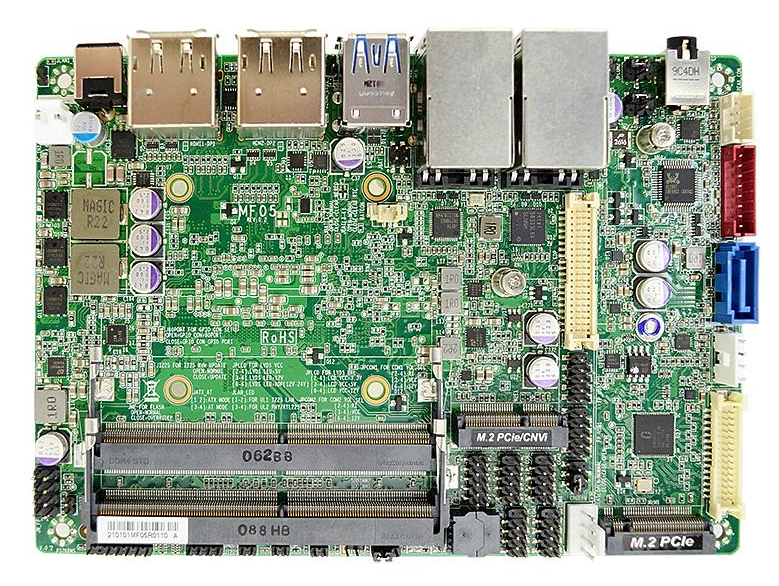
4. AI Performance: Both Have 6 TOPS, but Are They Equally Fast?
One of the most frequently misunderstood specifications is the NPU performance rating.
Both processors advertise approximately 6 TOPS of AI computing performance.
TOPS stands for trillion operations per second.
However, theoretical NPU performance does not directly represent real-world inference speed.
Why 6 TOPS Does Not Mean Identical AI Performance
Actual AI performance depends on several factors.
1. Neural network architecture
Different models use different operations and memory-access patterns.
A model optimized for convolutional processing may behave differently from a transformer-based or hybrid neural network.
2. Quantization
INT8 and INT4 quantization can reduce model size and computational requirements, but compatibility and accuracy must be verified.
3. Memory bandwidth
AI inference requires frequent movement of input tensors, intermediate features, and model weights.
Memory bandwidth can become a bottleneck even when the NPU has sufficient theoretical computing capability.
4. CPU preprocessing and postprocessing
Image resizing, color conversion, tensor preparation, object tracking, and non-maximum suppression can consume substantial CPU resources.
5. NPU scheduling and operator support
The availability of optimized operators, execution cores, and runtime scheduling strategies affects actual throughput.
6. Thermal conditions
Sustained inference may be limited by operating temperature, cooling capacity, and thermal throttling.
RK3588 AI Advantages
The RK3588 integrates a triple-core NPU architecture rated at 6 TOPS.
Combined with its stronger CPU, GPU, and memory subsystem, it is particularly suitable for AI systems requiring substantial processing around neural network inference.
Examples include:
- Multi-camera object detection
- Industrial visual inspection
- Video analytics
- Robotic perception
- Intelligent surveillance
- Edge AI computing gateways
RK3576 AI Advantages
The RK3576 also integrates a 6 TOPS NPU, enabling on-device neural network inference without relying entirely on cloud processing.
It can be a suitable platform for:
- Face recognition terminals
- Smart access control
- Single-camera object detection
- Intelligent HMI devices
- AI-enabled industrial gateways
- Retail customer analytics
- Embedded voice and vision interaction
AI Performance Comparison Example
Consider an object detection application using a YOLO-family neural network.
The complete processing pipeline may include:
Camera / Video Input
Decode + Resize + NormalizeCPU / ISP / RGA / video hardware
Neural Network InferenceRockchip NPU — up to 6 TOPS rated performance
Postprocessing + Object TrackingCPU and other available accelerators
Display / Storage / Network Output
The NPU only handles part of the complete pipeline.
Even if two processors achieve similar inference latency for a particular model, their end-to-end video analytics performance may differ because of CPU, memory, and multimedia subsystem limitations.
Engineering conclusion: Do not choose between RK3588 and RK3576 based on TOPS alone. Measure complete application latency, sustained FPS, CPU utilization, memory consumption, and thermal behavior.
5. Memory Architecture and Bandwidth
Memory performance is especially important in edge AI applications that process high-resolution images, multiple video streams, or large neural network models.
Both processors support modern LPDDR memory technologies, including LPDDR4, LPDDR4X, and LPDDR5.
However, their memory architectures differ.
RK3588 Memory Advantages
The RK3588 offers a wider memory subsystem, providing greater potential memory bandwidth.
This benefits applications that require frequent data transfers among the CPU, GPU, NPU, and video processing units.
Typical examples include:
- Multi-camera analytics
- Large image processing pipelines
- High-resolution rendering
- Multiple simultaneous AI models
- Memory-intensive edge applications
RK3576 Memory Characteristics
The RK3576 uses a 32-bit memory interface.
This architecture can help simplify memory subsystem design and may reduce platform cost and power requirements.
It is suitable for many applications where memory bandwidth is not the primary performance bottleneck.
Memory Selection Considerations
Before choosing either processor, engineers should determine:
- How much RAM is required by the operating system?
- What is the peak memory usage of the AI model?
- How many camera buffers are needed?
- Will the application run multiple AI models simultaneously?
- How much memory is needed for the display and graphics subsystem?
The maximum supported memory capacity should also be confirmed against the selected SOM design and validated BSP.
6. Video Encoding, Decoding, and Camera Capabilities
Video processing is another major differentiator between RK3588 and RK3576.
| Capability | RK3588 | RK3576 |
|---|---|---|
| Maximum advertised video decoding | 8K@60fps | 8K@30fps |
| Maximum advertised video encoding | 8K@30fps | 4K@60fps |
| ISP architecture | Dual 16 MP ISP | 16 MP ISP |
| Multiple camera support | Yes | Yes |
| HDMI video input | HDMI 2.0 RX supported | Not listed as an equivalent dedicated HDMI RX capability |
| Typical positioning | High-end multi-camera and video analytics | Embedded vision and multimedia AIoT |
These are maximum advertised capabilities under supported formats and configurations. They should not be interpreted as guaranteed simultaneous stream counts.
When RK3588 Is Better
The RK3588 is generally preferable for products involving:
- Multi-camera video analytics
- High-resolution video processing
- AI-powered NVR systems
- Intelligent video conferencing
- Industrial machine vision
- Advanced robotic vision
Its stronger multimedia subsystem provides additional design flexibility.
When RK3576 Is Sufficient
The RK3576 is suitable for applications such as:
- Smart door access terminals
- Industrial inspection terminals with moderate camera requirements
- Intelligent retail displays
- Single-camera edge AI devices
- Embedded video communication equipment
For example, a product using one camera to detect objects and send recognition results to a server may not require the full multimedia capabilities of the RK3588.
Important Camera Design Considerations
Engineers should evaluate more than camera count.
Relevant factors include sensor resolution, MIPI CSI lane allocation, ISP throughput, synchronization, frame buffering, image preprocessing, and thermal behavior.
The number of physically available camera connectors on a development board does not necessarily equal the maximum number supported by the processor.
7. Display Capabilities: Which Is Better for Multi-Screen Products?
Both processors support advanced display interfaces, but their intended performance levels differ.
RK3588 Display Capabilities
The RK3588 is designed for high-end multimedia and multi-screen applications.
It supports high-resolution display output and multiple display interfaces, including HDMI, DisplayPort, eDP, and MIPI DSI.
It is suitable for:
- Multi-screen digital signage
- High-resolution interactive displays
- Industrial visualization systems
- Advanced meeting room terminals
- Video walls
- Multi-display control stations
RK3576 Display Capabilities
The RK3576 supports up to three displays with independent content, subject to supported interface combinations.
It includes interfaces such as HDMI, DisplayPort, MIPI DSI, eDP, and parallel display options.
This makes it attractive for:
- Industrial HMI
- Smart retail terminals
- Multi-screen POS systems
- Intelligent kiosks
- Interactive control panels
- E-paper and specialized display products
Display Selection Recommendation
If the product requires extremely high-resolution rendering, demanding multi-display graphics, or complex visual applications, RK3588 is generally preferable.
For two- or three-screen embedded systems with moderate graphics requirements, RK3576 can be a practical choice.
8. Interfaces and Expansion Capabilities
Interface selection can determine whether a processor is suitable for an industrial product.
A processor may have sufficient AI performance but still be unsuitable if it lacks the required high-speed expansion or industrial control capabilities.
RK3588: High-Speed Expansion
The RK3588 provides a rich high-speed interface architecture, including PCIe 3.0, PCIe 2.x, USB 3.x, SATA, and Gigabit Ethernet capabilities.
These interfaces are useful for:
- NVMe storage
- High-bandwidth peripherals
- AI edge servers
- Multi-camera data acquisition
- Industrial networking
- High-speed communication modules
PCIe 3.0 is particularly valuable when an application requires higher data transfer bandwidth.
RK3576: Industrial Integration
The RK3576 provides PCIe 2.1, SATA, USB 3.0, dual RGMII, CAN FD, DSMC, and other embedded interfaces.
It also integrates a Cortex-M0 microcontroller for auxiliary control tasks.
This combination makes the RK3576 attractive for industrial products requiring both application processing and device-level control.
Examples include:
- Industrial gateways
- Machine controllers
- Smart manufacturing terminals
- CAN-based equipment
- Intelligent automation devices
Important Interface Design Warning
Many SoC interfaces share physical resources.
For example, PCIe, SATA, USB, and display functions may use shared PHYs or multiplexed pins.
Not all advertised interfaces can necessarily operate simultaneously.
Before PCB design, engineers should verify the exact interface configuration in the processor TRM, pin multiplexing tables, hardware design guide, and selected module documentation.
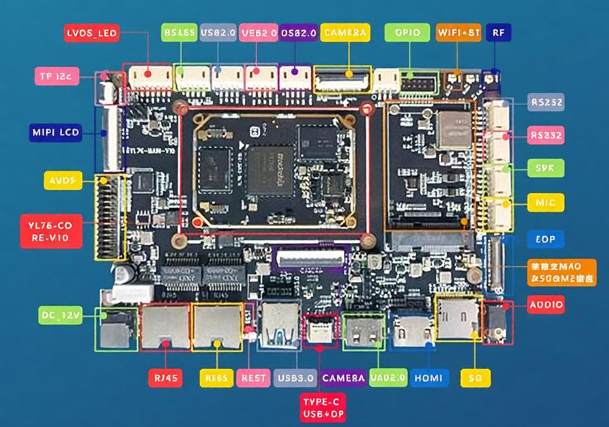
9. Power Consumption and Thermal Management
Power consumption is a critical factor for embedded AI products, particularly fanless industrial systems and compact enclosures.
The RK3588 provides higher general-purpose computing and graphics capability, while the RK3576 is positioned for more power-conscious AIoT designs.
However, it would be incorrect to assume that one processor always consumes less power under every workload.
Factors Affecting Power Consumption
Actual power consumption depends on:
- CPU and GPU utilization
- NPU operating frequency and utilization
- Memory type and capacity
- Video processing workload
- Peripheral devices
- Operating voltage and DVFS configuration
- BSP and power-management settings
- Ambient temperature
RK3588 Thermal Design
High-performance RK3588 products may require substantial thermal engineering when running demanding sustained workloads.
Possible cooling solutions include heat spreaders, thermal pads, heatsinks, and active cooling where necessary.
RK3576 Thermal Design
The RK3576 can be attractive for compact and fanless products when the required workload fits within its sustained thermal envelope.
Nevertheless, fanless operation must be validated using the final enclosure, PCB layout, ambient conditions, and application workload.
Recommended Thermal Validation
Measure idle power, typical workload power, sustained full-load power, junction or reported die temperature, thermal throttling, and performance after extended operation.
No universal power-consumption or thermal-performance ratio should be assumed without testing comparable hardware under identical conditions.
10. RK3588 vs RK3576: Hardware Design and BOM Cost
The processor price is only one part of the total product cost.
A complete embedded AI hardware platform may include:
- Processor and PMIC
- LPDDR memory
- eMMC or UFS storage
- Ethernet PHY
- USB and PCIe components
- Camera connectors
- Display interfaces
- PCB fabrication
- SMT assembly
- Cooling components
- Testing and certification
RK3588 Hardware Design Considerations
The RK3588’s high-performance architecture and extensive high-speed interfaces may increase design complexity.
Potential challenges include:
- High-speed PCB routing
- Memory signal integrity
- Power distribution network design
- Multi-interface layout constraints
- Thermal management
- EMI/EMC compliance
RK3576 Hardware Design Considerations
The RK3576 may enable a more economical design for products that do not need the RK3588’s higher-end features.
Its 32-bit memory architecture and targeted interface configuration can be advantageous in certain cost-sensitive designs.
However, the actual BOM difference depends on the selected components, PCB layer count, production volume, and supplier pricing.
Total Cost of Ownership
A meaningful comparison should include both one-time engineering expenses and recurring manufacturing costs.
| Cost Category | Engineering Consideration |
|---|---|
| Processor | Unit price and supply availability |
| Memory | Capacity, bus configuration and sourcing |
| PCB | Layer count, stack-up and high-speed routing |
| Power | PMIC, regulators and power sequencing |
| Cooling | Heatsink, enclosure and thermal materials |
| Software | BSP adaptation, drivers and maintenance |
| Testing | Functional tests, AI validation and reliability |
| Certification | EMC, safety and product-specific requirements |
| Manufacturing | Assembly yield, test time and production volume |
For production quantities of several thousand units, even a modest reduction in per-unit BOM cost can significantly affect total project economics.
However, selecting a lower-cost processor that cannot meet performance requirements can create much larger redesign costs.
11. Software Ecosystem: Linux, Android, and RKNN
Hardware performance alone does not determine development efficiency.
Software compatibility, driver availability, AI model deployment tools, and long-term BSP maintenance can have a major impact on product development costs.
Both RK3588 and RK3576 support Linux and Android development environments.
However, the exact operating system versions and available drivers depend on the board vendor and BSP release.
Rockchip RKNN Toolkit
Rockchip provides the RKNN software ecosystem for deploying neural networks on supported Rockchip NPUs.
Its main components include:
- RKNN-Toolkit2: Model conversion, quantization, analysis, and performance evaluation.
- RKNN-Toolkit-Lite2: Python-based deployment and inference interfaces.
- RKNN Runtime: C/C++ APIs for executing models on the target hardware.
- RKNPU Driver: Kernel-level interaction with the NPU hardware.
The maintained RKNN-Toolkit2 repository lists both RK3588 and RK3576 as supported platforms.
Typical AI Model Deployment Workflow
1
Train or select an AI model
2
Export to a supported model format
3
Convert and quantize using RKNN-Toolkit2
4
Validate accuracy and operator compatibility
5
Deploy to RK3588 or RK3576
6
Benchmark and optimize on the target board
A successful model conversion does not automatically guarantee acceptable accuracy or latency. Engineers must validate the converted model on the actual target hardware.
Important Software Compatibility Considerations
Before starting a commercial project, confirm:
- Whether the required AI operators are supported.
- Whether model quantization meets accuracy requirements.
- Whether the selected kernel and BSP support all necessary peripherals.
- Whether camera, display, and NPU drivers work together reliably.
- Whether the vendor provides long-term security and software maintenance.
- Whether the chosen runtime version matches the model conversion toolchain.
For products requiring local large language models, evaluate the separate RKNN-LLM ecosystem and confirm model compatibility, memory requirements, and practical token-generation performance.
A 6 TOPS NPU rating alone is not sufficient to establish suitability for a particular LLM.
12. RK3588 vs RK3576: Which Is Better for Different AI Applications?
The most useful processor comparison is one based on actual product requirements.
| AI Application | Recommended Processor | Main Reason |
|---|---|---|
| Multi-camera AI surveillance | RK3588 | Stronger CPU and multimedia subsystem |
| Industrial visual inspection | RK3588 for demanding workloads | More processing headroom |
| Single-camera object detection | RK3576 | Often sufficient with lower platform cost |
| Industrial HMI | RK3576 | Display and control integration |
| AI-powered POS terminal | RK3576 | Suitable graphics and AI capability |
| High-end robotic vision | RK3588 | CPU, GPU and high-speed expansion |
| Industrial AI gateway | RK3576 | Industrial interfaces and integrated control |
| Multi-screen 8K digital signage | RK3588 | Higher-end display and graphics capability |
| Smart access control | RK3576 | Efficient embedded vision platform |
| Edge AI server | RK3588 | Stronger computing and I/O capabilities |
| AI voice interaction terminal | RK3576 | Suitable embedded AI and audio interfaces |
| Advanced multi-camera NVR | RK3588 | Video processing and expansion flexibility |
These are engineering recommendations, not guarantees. Final selection requires workload validation.
Application 1: Industrial Machine Vision
Industrial machine vision systems may require object detection, defect classification, image segmentation, and high-speed image acquisition.
The RK3588 is generally preferable for demanding multi-camera or high-resolution applications.
The RK3576 may be suitable for single-camera inspection systems with moderate inference requirements.
Key evaluation metrics: end-to-end latency, detection accuracy, sustained FPS, camera synchronization, and thermal stability.
Application 2: Industrial HMI
Industrial HMI products typically prioritize touchscreen responsiveness, display quality, stable communication, and long-term reliability.
The RK3576 is often an attractive option because of its display capabilities, embedded interfaces, and Cortex-M0 auxiliary processor.
The RK3588 becomes more relevant when the HMI includes complex 3D visualization, multiple demanding video feeds, or substantial local AI processing.
Application 3: Intelligent Retail Systems
Smart retail products may combine a camera, touchscreen, barcode recognition, payment peripherals, and network connectivity.
The RK3576 can provide a practical balance of performance and cost for many such applications.
For advanced analytics involving several camera streams and complex visual processing, the RK3588 may be more appropriate.
Application 4: Robotics
Robotic systems can require simultaneous localization, object detection, path planning, sensor processing, and network communication.
The RK3588 is a stronger candidate for computationally intensive robotic perception.
The RK3576 may be sufficient for lighter robotic applications where real-time control integration and system cost are important.
Neither processor should be assumed to replace a dedicated safety controller or real-time motion controller without appropriate system-level validation.
Application 5: Edge AI Gateways
An edge AI gateway may collect industrial data, run local analytics, communicate with cloud services, and manage connected devices.
The RK3576 is attractive for moderate AI workloads and industrial connectivity.
The RK3588 is preferable when the gateway also handles heavy video analytics, substantial local processing, or high-bandwidth expansion.
13. Practical Selection Framework: Choose the Right Processor in Five Steps
Instead of selecting a processor based only on specifications, use a structured engineering evaluation.
Step 1: Define the AI Workload
Identify the exact model, input resolution, target FPS, number of concurrent streams, and maximum acceptable latency.
Step 2: Evaluate the Complete Processing Pipeline
Measure camera acquisition, preprocessing, NPU inference, postprocessing, rendering, and communication overhead.
Step 3: Verify Hardware Interfaces
Confirm camera lanes, display outputs, PCIe requirements, Ethernet, USB, CAN, and storage interfaces.
Step 4: Validate Power and Thermal Requirements
Test the processor under sustained application workloads inside the intended enclosure.
Step 5: Compare Total Product Cost
Calculate processor, memory, PCB, power supply, cooling, manufacturing, software, and maintenance costs.
14. Common Mistakes When Selecting RK3588 or RK3576
Mistake 1: Assuming Both 6 TOPS NPUs Deliver the Same FPS
TOPS measures theoretical computational capacity, not complete application throughput.
Solution: Benchmark the exact model and full processing pipeline on both processors.
Mistake 2: Choosing RK3588 for Every AI Project
The RK3588 offers stronger overall performance, but that performance may be unnecessary for simple embedded AI products.
Solution: Match hardware capabilities to measurable product requirements.
Mistake 3: Ignoring Memory Bandwidth
A model may fit into RAM but still perform poorly because of memory bandwidth limitations.
Solution: Profile memory usage, data movement, and inference latency.
Mistake 4: Overlooking Shared Interfaces
The existence of multiple interfaces in a datasheet does not guarantee simultaneous availability.
Solution: Validate pin multiplexing and shared PHY configurations before PCB layout.
Mistake 5: Ignoring Thermal Throttling
Short benchmark results may not represent sustained production performance.
Solution: Run long-duration tests under realistic ambient temperatures.
Mistake 6: Underestimating Software Integration
Driver compatibility, BSP versions, and model conversion issues can delay product development.
Solution: Validate the complete software stack before committing to custom hardware.
Custom RK3588 and RK3576 Hardware Development Services
Selecting the right Rockchip processor is only the beginning of developing a reliable AI product.
A successful commercial design also requires processor integration, power architecture, high-speed PCB layout, BSP adaptation, AI model deployment, testing, and production planning.
LST-AI provides Rockchip-based embedded hardware development and OEM/ODM solutions, supporting customers from product concept and hardware architecture through prototyping and manufacturing.
Our development service scope includes:
- Hardware design: Custom RK3588/RK3576 carrier boards, processor integration, power systems, and interface design.
- PCB engineering: High-speed PCB layout, memory routing, signal integrity, power integrity, and DFM review.
- Embedded software: Linux/Android BSP integration, peripheral drivers, and system customization.
- Edge AI integration: AI model conversion, RKNN deployment, inference optimization, and application integration.
- Prototype validation: Functional testing, interface verification, thermal evaluation, and reliability planning.
- Manufacturing support: PCB fabrication, SMT assembly, component sourcing, testing, and production introduction.
Whether you are developing an industrial AI gateway, smart display, machine vision system, robotic controller, or customized AIoT device, the right processor architecture can reduce development risk and improve long-term product competitiveness.