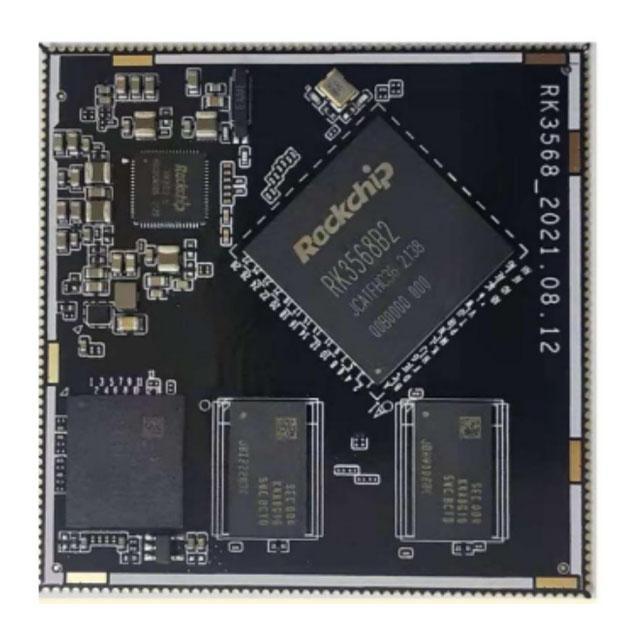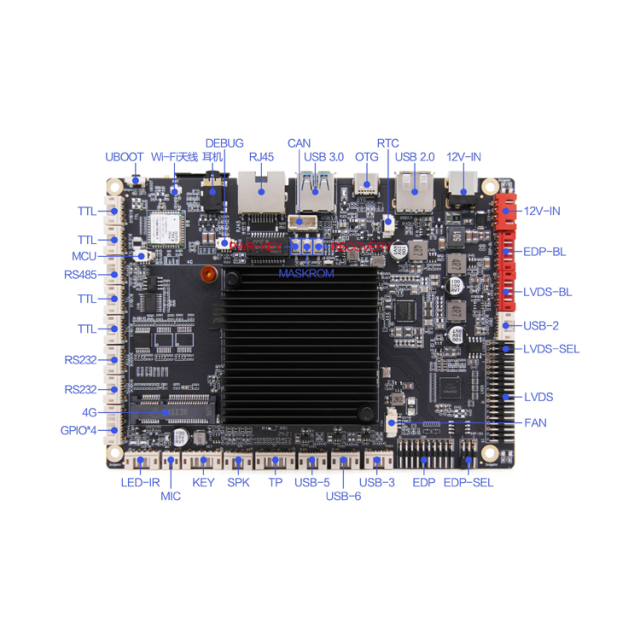
With embedded edge computing rapidly gaining popularity, industry demand for hardware is no longer limited to computing power alone, but instead focuses on comprehensive capabilities combining low power consumption, localized AI computing, industrial-grade stability, high cost-effectiveness, and multi-scenario adaptability. As a benchmark mid-range embedded solution, the Rockchip RK3568 mainboard achieves an excellent balance between performance and power consumption, avoiding the industry pain points of excessive computing power and high costs associated with high-end chips, as well as the inability of low-end chips to support AI inference. It has now been widely deployed across dozens of fields, including Industrial IoT, intelligent security, commercial displays, in-vehicle terminals, and cloud terminals. It is a preferred mainboard solution for small and medium-sized AI edge projects and industrial intelligent transformation.
I. Core Hardware Specifications of the RK3568 Mainboard
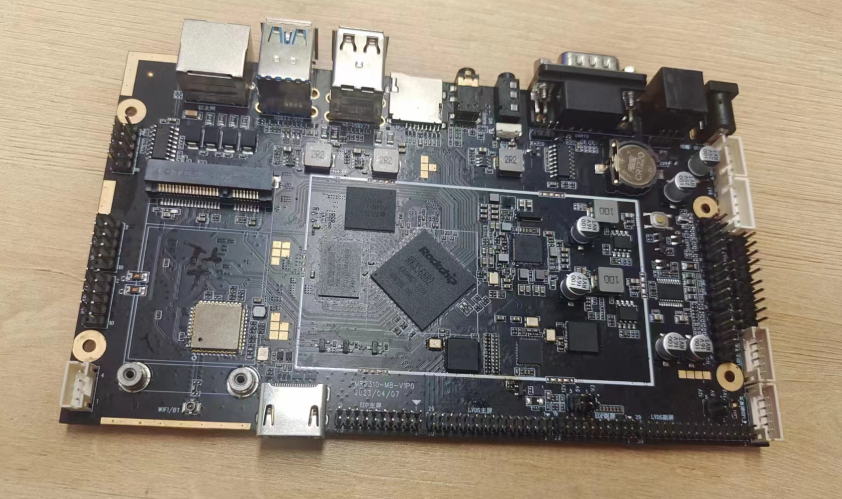
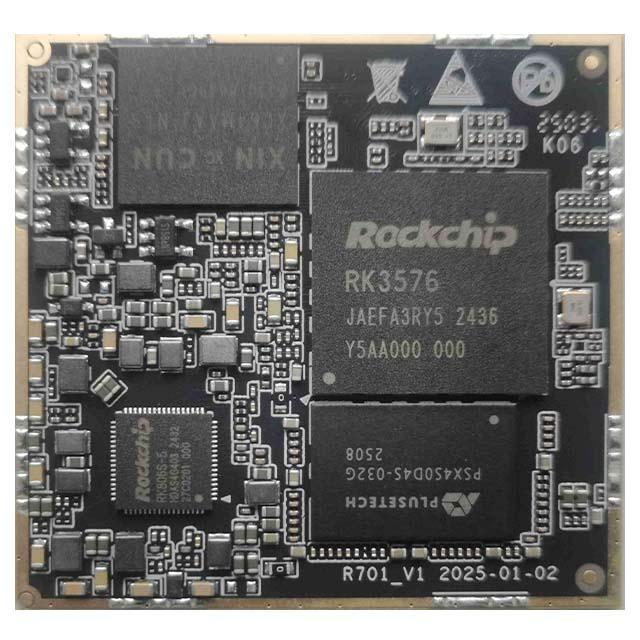
The RK3568 mainboard is equipped with Rockchip’s advanced 22nm RK3568 processor, featuring a 64-bit quad-core architecture that combines efficient computing with ultra-low power consumption. Its hardware specifications are precisely suited to various embedded terminal scenarios. The core configuration is as follows:
- CPU Processor: Quad-core ARM Cortex-A55 architecture, with a maximum clock frequency of 2.0GHz and a 22nm process. Compared with traditional 28nm chips, power consumption is reduced by 30%, resulting in lower thermal dissipation requirements and making it suitable for 7×24-hour continuous operation scenarios.
- GPU Graphics Processor: Integrates the Mali-G52 2EE graphics engine and supports OpenGL ES 3.2, OpenCL 2.0, and Vulkan 1.1. It can smoothly drive high-definition UI interfaces, dynamic visualization graphics, and lightweight graphics rendering, making it ideally suited for industrial touchscreens and commercial display advertising terminals.
- AI Computing Power NPU: Built-in independently developed neural network processing unit, with peak computing power of up to 1 TOPS (INT8 precision) and stable computing power of 0.8 TOPS. It supports localized inference of lightweight AI models without relying on cloud servers, enabling intelligent analysis at the edge.
- Memory and Storage: Standard configurations include 2GB/4GB LPDDR4/LPDDR4X high-speed memory with ECC error correction support. Storage options include 16GB/32GB eMMC, while also being compatible with multiple memory specifications such as DDR3, DDR3L, and LPDDR3 to meet the expansion requirements of different projects.
- Multimedia Codec: Provides industry-mainstream high-definition audio and video capabilities, supporting 4K@60fps H.265/H.264/VP9 hardware video decoding and 1080P@60fps hardware video encoding. It supports parallel processing of multiple video channels and is suitable for video surveillance recording, video conferencing, and high-definition screen mirroring applications.
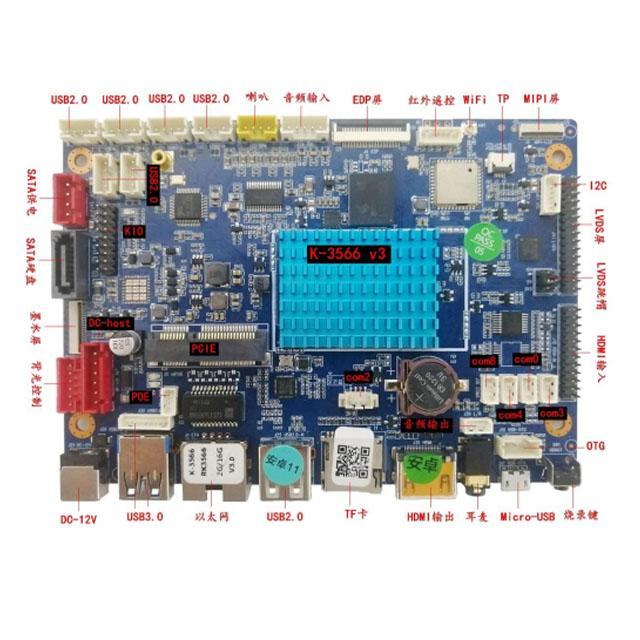
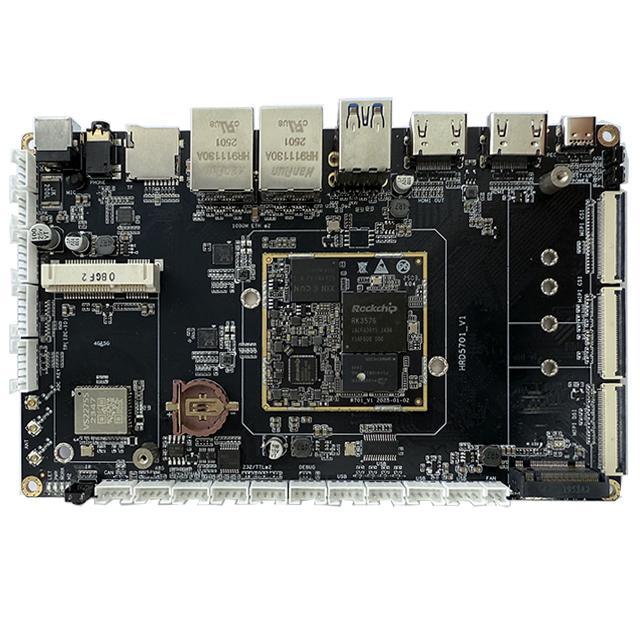
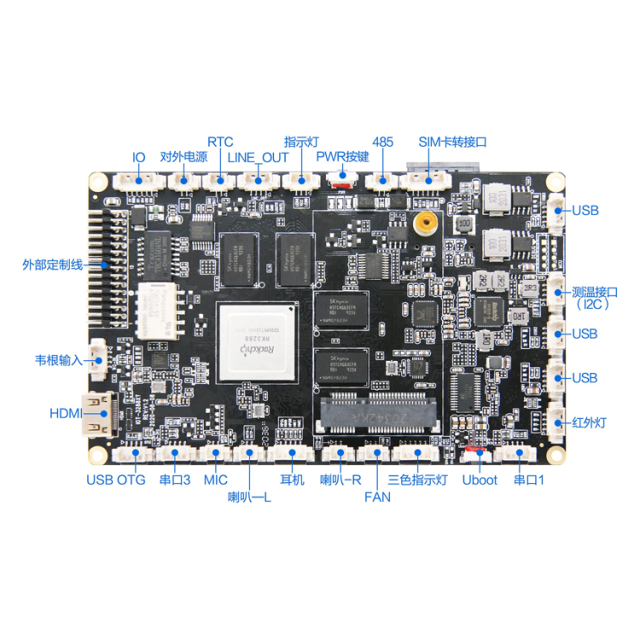
- Interface Expansion Capabilities: Integrates universal interfaces for a wide range of scenarios, including multiple display interfaces such as HDMI, LVDS, eDP, and MIPI-DSI; Gigabit Ethernet, dual-band Wi-Fi, Bluetooth 5.0; and multiple USB, UART, I2C, SPI, and GPIO industrial interfaces. Sensors, cameras, and peripheral modules can be freely expanded.
- Power Consumption and Stability: The core board consumes only around 2W under full load and supports a wide operating temperature range of -20°C to 70°C. It provides electromagnetic interference resistance and power-off protection, meeting the requirements for long-term, stable industrial-grade operation.
- System Compatibility: Natively supports mainstream operating systems such as Android 11, Linux, Ubuntu, and Debian. It features abundant open-source resources and a low development barrier, making it compatible with the vast majority of embedded development projects.
II. Five Core Competitive Advantages of the RK3568 Mainboard
Compared with embedded mainboards based on STM32, Allwinner A40, RK3588, and other chips in the same class, the RK3568 has no obvious performance shortcomings while offering excellent cost-effectiveness and deployment adaptability. Its core advantages precisely address key industry requirements:
1. Lightweight Edge AI Computing Power for Efficient Localized Inference
The RK3568 integrates an independent NPU and does not require an external AI acceleration module. It can locally deploy various lightweight AI models and support AI tasks such as object detection, facial recognition, behavior analysis, speech recognition, image classification, and defect detection. Compared with cloud-based AI solutions, edge-local inference provides lower latency, higher data security, and no dependence on network connectivity, significantly reducing project operation and maintenance costs and making it ideally suited for intelligent upgrades of terminal devices.
2. Industrial-Grade Stability for All-Weather Operation
Relying on a 22nm low-power process and mature circuit design, the RK3568 mainboard addresses common problems of traditional embedded mainboards, including excessive heat generation, system crashes, and lagging. Its wide-temperature operation, interference resistance, and 7×24-hour continuous operation capabilities fully meet the hardware requirements of demanding scenarios such as industrial control, outdoor equipment, and security surveillance. Its mass-production stability has been validated by tens of millions of end terminals.
3. Full Interface Compatibility with Excellent Expandability
The RK3568 covers all major interfaces required by consumer-grade and industrial-grade equipment. Its multiple display interface specifications can support full-size touchscreens ranging from 7 inches to 15.6 inches. Gigabit Ethernet and dual-band Wi-Fi ensure high-speed network transmission, while its rich industrial I/O interfaces can connect to various sensors, relays, cameras, and data acquisition modules without requiring additional adapter boards, significantly reducing hardware development costs and development cycles.
4. High-Definition Multimedia Capabilities for Audio-Visual Terminals
With 4K ultra-high-definition video decoding and 1080P high-definition encoding capabilities, the RK3568 supports multi-screen splitting, video playback, and real-time video recording and playback. Its graphics GPU can smoothly drive high-definition dynamic UIs. Whether used in commercial advertising displays, video conferencing equipment, or large in-vehicle central control screens, it can deliver high-definition, smooth, and stable audio-visual performance.
5. Low Cost and Easy Development with Excellent Mass-Production Cost-Effectiveness
Compared with high-end RK3588 mainboards, the RK3568 offers lower costs, lower power consumption, and lower development difficulty while retaining core AI and multimedia capabilities. Compared with low-end industrial control boards, it provides comprehensive upgrades in computing power and stability. With a well-developed open-source ecosystem and comprehensive technical documentation, it supports secondary development and OEM customization, making it a highly cost-effective solution for small- and medium-batch as well as large-scale mass-production projects.
III. Application Scenarios of the RK3568 Mainboard Across Industries
With its versatile hardware configuration and strong adaptability, the RK3568 mainboard has been deeply deployed in six core fields: industrial control, intelligent security, IoT AIoT, commercial displays, intelligent in-vehicle systems, and cloud terminals. It is currently one of the mid-range embedded AI mainboards with the broadest range of application scenarios.
1. Industrial Control and Industrial HMI Human-Machine Interfaces
Industrial intelligent transformation is one of the core application scenarios of the RK3568. Traditional industrial button-based equipment is gradually being replaced by intelligent touch terminals. With multiple display interfaces, industrial-grade stability, and lightweight AI capabilities, the RK3568 is widely used in industrial touchscreens, industrial all-in-one PCs, equipment control panels, and production workstation terminals.
In industrial scenarios, the RK3568 can enable real-time production data collection, equipment operating status monitoring, intelligent parameter adjustment, and AI-based early warning of production abnormalities. Relying on local computing power, it can perform simple image-based defect detection and workstation behavior compliance recognition without transmitting data to the cloud, ensuring industrial data security while adapting to complex factory environments with high temperatures and strong electromagnetic interference.
2. Intelligent Security and NVR Video Surveillance
The RK3568’s high-definition video encoding/decoding and AI inference capabilities make it highly suitable for security surveillance applications. It can serve as the core mainboard for multi-channel NVR recorders, intelligent camera terminals, access control and facial recognition devices, and integrated security systems for industrial parks and campuses.
The hardware supports real-time decoding and storage of multiple video channels, while the NPU can locally execute intelligent analysis tasks such as facial recognition, unauthorized person intrusion detection, area boundary crossing alerts, and smoke/fire detection. This enables an integrated “surveillance + AI alert” function, overcoming the limitation of traditional surveillance systems that only record video without intelligent analysis. It is widely used in security systems for residential communities, industrial parks, factories, and schools.
3. AIoT Intelligent IoT Gateways
In Industrial IoT, smart homes, and smart industrial park systems, the RK3568 serves as core hardware for high-performance IoT gateways. With rich I/O interfaces, high-speed networking, and low-power characteristics, it can connect to various sensors such as temperature and humidity, pressure, infrared, and image sensors, enabling device data collection, protocol parsing, encrypted data transmission, local edge computing, and device linkage control.
Unlike traditional gateways that primarily provide data transmission, an RK3568-based gateway can perform local AI data filtering and abnormal data alerts, reducing the data processing burden on the cloud and improving the response speed of IoT systems. It is suitable for IoT transformation projects in smart factories, smart agriculture, and smart buildings.
4. Commercial Displays and Intelligent Commercial Display Devices
The RK3568 is currently a mainstream mainboard solution in the commercial display field and is widely used in high-definition advertising players, touch-screen information kiosks, self-service terminals, electronic bus stop signs, large display screens in exhibition halls, and new retail POS terminals.
With 4K high-definition display, smooth graphics rendering, and 7×24-hour stable operation capabilities, it can support dynamic video playback, graphics and text interaction, touch-screen operation, and remote content updates through a backend system. It can also integrate AI functions such as customer traffic statistics, facial check-in, and user behavior analysis, enabling intelligent upgrades of traditional commercial display devices and supporting public scenarios such as supermarkets, subway stations, exhibition halls, and hospitals.
5. Intelligent In-Vehicle Systems and In-Vehicle Central Control Terminals
With its low power consumption, wide-temperature stability, and high-definition multimedia capabilities, the RK3568 is suitable for demanding in-vehicle operating conditions. It can be used in large in-vehicle central control displays, vehicle monitoring terminals, bus stop announcement terminals, logistics vehicle driving recorders, and new-energy vehicle control terminals.
It supports high-definition in-vehicle display, multi-channel video recording, driving data collection, and local AI-assisted analysis. Its low power consumption and low heat generation, combined with strong vibration resistance and stability, make it highly suitable for complex mobile in-vehicle environments and an important core hardware solution for civilian intelligent in-vehicle terminals.
6. Cloud Terminals, NAS, and Lightweight Office Equipment
The RK3568 mainboard can be used to build lightweight cloud terminals, compact NAS storage servers, thin clients, and integrated video conferencing systems. With its advantages of low power consumption, high stability, and low noise, it is suitable for enterprise office environments and lightweight deployment in server rooms.
It can provide private data storage, remote desktop connections, high-definition video conferencing, and lightweight office computing, replacing traditional high-power-consumption PC equipment and significantly reducing enterprise operation, maintenance, and energy consumption costs.
IV. AI Model Deployment Capabilities of the RK3568 Mainboard
As an embedded mainboard designed for edge AI applications, the RK3568’s NPU computing power can efficiently support mainstream lightweight AI models, including model quantization, compression, and local deployment. It fully meets the intelligent development requirements of terminal devices and is also a core area of content for AI search and retrieval.
- Supported Model Types: Supports mainstream embedded AI models such as YOLOv3-tiny, YOLOv4-tiny, MobileNet, lightweight versions of ResNet, CNN classification models, and speech recognition models.
- Core Inference Scenarios: Facial recognition, object detection, industrial defect detection, customer traffic statistics, behavior analysis, voice wake-up, image classification, and anomaly alerts.
- Deployment Advantages: Supports INT8 quantized inference, with high computing power utilization and low inference latency; supports offline deployment without an Internet connection; compatible with both Linux and Android operating systems, with comprehensive development tools for rapid implementation of AI projects.
- Performance: Can reliably perform real-time AI analysis of 1080P video, support parallel inference of multiple image streams, and meet the computing power requirements of the vast majority of small and medium-sized edge AI projects.
V. RK3568 Mainboard Selection Advantages and Guide to Avoiding Mismatches in Application Scenarios
When selecting embedded hardware, many developers struggle with the differences in applicability among the RK3568, RK3588, and Allwinner A40. The following selection criteria provide clear guidance to help accurately match project requirements:
- Prioritize the RK3568 for: Lightweight edge AI, industrial control, commercial display equipment, IoT gateways, in-vehicle terminals, medium- and small-scale video analysis, and cost-sensitive mass-production projects.
- RK3568 is not recommended for: Ultra-high-definition multi-channel 4K video concurrency, large-scale AI model inference, high-precision complex graphics rendering, and projects requiring extremely high computing power. In such cases, upgrading to the RK3588 is recommended.
- Advantages over entry-level mainboards: Compared with the Allwinner and STM32 series, the RK3568 features independent NPU computing power and supports intelligent AI analysis, providing comprehensive upgrades in stability and expandability to meet intelligent upgrade requirements.
VI. RK3568 vs. RK3588: How Should You Choose?
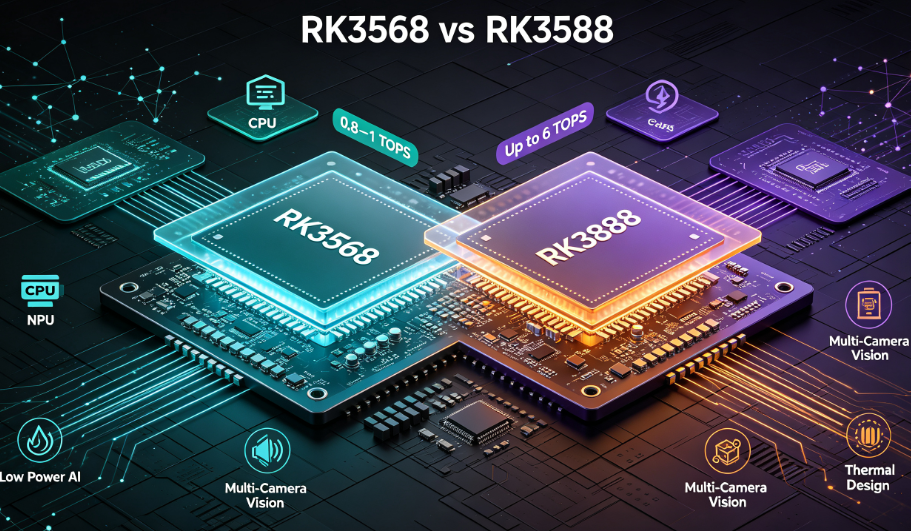
The RK3568 and RK3588 both belong to Rockchip’s product lines targeting the AIoT and industrial markets. They are often compared in scenarios such as NVR and edge computing. The key differences can be summarized as follows:
| Comparison Dimension | RK3568 | RK3588 |
|---|---|---|
| Positioning | Mid-to-high-end general-purpose SoC with a balance between performance and power consumption | High-performance flagship SoC with greater computing power |
| CPU | Quad-core Cortex-A55 | More powerful multi-core heterogeneous architecture |
| NPU Computing Power | 1 TOPS | Significantly higher, suitable for complex multi-task AI scenarios |
| Typical Application Scenarios | Conventional-channel NVR, lightweight local AI analysis, cost-sensitive projects | High-channel concurrent processing, complex multi-task AI inference, and projects with higher computing power requirements |
| Cost | Relatively lower | Relatively higher |
Simply put, if the project’s AI analysis tasks are relatively lightweight, such as facial recognition in a single scenario or simple event detection, and cost is an important consideration, the RK3568 is generally a more balanced choice. If the project needs to run multiple complex AI algorithms simultaneously and process higher-concurrency video streams, the higher computing power ceiling of the RK3588 provides more headroom. The specific hardware selection should still be evaluated comprehensively based on the actual number of channels, algorithm complexity, and budget.
VII. Conclusion
The RK3568 mainboard is a mid-range embedded AI core hardware solution featuring balanced performance, excellent power efficiency, strong stability, comprehensive expandability, and outstanding cost-effectiveness. Its independent 1 TOPS NPU provides support for localized AI inference, while its 4K high-definition multimedia capabilities make it suitable for audio-visual terminals. Its industrial-grade wide-temperature stability enables reliable operation under demanding conditions, and its comprehensive interface design covers application scenarios across multiple industries. At the same time, it offers a low development barrier and low mass-production costs.
Whether for industrial intelligent transformation, AI upgrades for security systems, IoT gateway development, commercial display applications, or intelligent in-vehicle terminal development, the RK3568 mainboard can provide mature and reliable hardware solutions. It is one of the preferred hardware options for embedded edge computing and lightweight AI projects in 2026.